
The way you begin your morning shapes everything that follows — your digestion, your mental clarity, your resilience to stress, and even the quality of your sleep that night. Ayurveda understood this thousands of years ago and codified it into a precise system called Dinacharya — the daily routine. Far from a list of wellness trends, Dinacharya is a clinically structured sequence of morning rituals designed to clear metabolic waste, ignite the digestive fire, and align your body with the rhythms of nature.
What Is Dinacharya?
The Sanskrit word Dinacharya combines dina (day) and charya (conduct or routine). It is described in all three foundational Ayurvedic texts — the Charaka Samhita, the Sushruta Samhita, and the Ashtanga Hridayam — as the cornerstone of preventive health.
The classical reasoning is straightforward: during sleep, the body shifts from active digestion to tissue repair and detoxification. This process generates ama — metabolic residue that accumulates on the tongue, in the sinuses, and throughout the digestive tract. Left uncleared, ama dulls the senses, weakens agni (digestive fire), and sets the stage for chronic imbalance. The Dinacharya sequence systematically removes this residue and prepares the body and mind for the day ahead.
What makes Dinacharya remarkable is that modern chronobiology has validated its core premise. The 2017 Nobel Prize in Physiology or Medicine was awarded for research on circadian rhythms — the biological clocks in every cell that regulate approximately 40% of our genes. Ayurveda's time-based approach to daily living, structured around the dosha clock, anticipated this science by millennia.
The Dosha Clock: Why Timing Matters
Ayurveda teaches that the three doshas dominate in predictable cycles throughout the day:
| Time | Dominant Dosha | Quality | Implications |
|---|---|---|---|
| 6:00–10:00 AM | Kapha | Heavy, slow, stable | Wake before this period; exercise during it |
| 10:00 AM–2:00 PM | Pitta | Hot, sharp, intense | Eat your main meal — agni is strongest |
| 2:00–6:00 PM | Vata | Light, mobile, creative | Best time for mental work and creativity |
| 6:00–10:00 PM | Kapha | Heavy, grounding | Wind down; prepare for sleep |
| 10:00 PM–2:00 AM | Pitta | Metabolic, restorative | Deep tissue repair; be asleep by 10 PM |
| 2:00–6:00 AM | Vata | Subtle, alert | Brahma Muhurta — ideal for waking |
This is why Ayurveda insists on waking before 6:00 AM. The predawn Vata period (2:00–6:00 AM) supports alertness and easy transition from sleep to wakefulness. Once the Kapha period begins at 6:00 AM, the body's natural tendency shifts toward heaviness — making it harder to rise and creating a sluggish start to the day.
The Classical Morning Sequence
1. Wake During Brahma Muhurta
Brahma Muhurta — approximately 96 minutes before sunrise — is considered the most sattvic (pure, clear) time of day. The Ashtanga Hridayam prescribes waking during this window for optimal mental clarity and spiritual awareness. In practical terms, this means rising between 4:30 and 6:00 AM, depending on the season.
2. Drink Warm Water
Before any food or oral hygiene, drink a glass of warm or hot water — optionally with a squeeze of lemon and a pinch of mineral salt. This simple act rehydrates the tissues after hours of sleep, gently stimulates peristalsis, and begins to kindle agni. Cold water, by contrast, suppresses digestive fire and constricts the channels.
3. Tongue Scraping (Jihva Nirlekhan)
One of the most evidence-supported practices in the entire Dinacharya sequence, tongue scraping removes the visible coating of ama that accumulates on the tongue overnight. Classical texts recommend a curved metal scraper — ideally copper, which has inherent antimicrobial properties — used with five to ten gentle strokes from back to front.
A comparative clinical trial published in the Journal of Periodontology (2004) found that tongue scrapers reduced volatile sulfur compounds by 75%, compared to just 45% with toothbrushing alone. A Cochrane systematic review confirmed these findings, noting a statistically significant advantage for tongue scraping over brushing for halitosis reduction.
4. Oil Pulling (Kavala Gandusha)
After tongue scraping, the Charaka Samhita prescribes oil pulling — swishing one tablespoon of sesame oil (the classical standard) or coconut oil in the mouth for 5–15 minutes. Charaka states that this practice strengthens the jaw, deepens the voice, prevents dryness of the mouth and throat, and protects against dental disease.
A 2025 randomised controlled trial published in Clinical Oral Investigations confirmed that sesame oil pulling reduced full-mouth plaque by 18.98% after eight weeks, compared to 10.49% in the control group — a statistically significant difference (p = 0.023). A systematic review of eight RCTs concluded that sesame oil was as effective as chlorhexidine mouthwash for plaque reduction.
5. Nasya (Nasal Oiling)
Pratimarsha Nasya — applying one to two drops of sesame oil or Anu Taila to each nostril — lubricates the nasal passages, supports the upper respiratory system, and promotes clarity of the senses. Ayurveda considers the nose the door to the brain (shirah dwar), and daily nasya is prescribed to nourish prana and protect the sinuses from dryness and environmental pollutants.
 Woman meditating outdoors on a tree log during the morning, embodying the stillness of a Dinacharya practice
6. Abhyanga (Warm Oil Self-Massage)
Abhyanga is the practice most frequently associated with Dinacharya — and arguably the most transformative. The Charaka Samhita devotes extensive description to its benefits: nourishment of the tissues (dhatus), longevity, sound sleep, healthy skin, and resistance to Vata aggravation.
The practice involves massaging warm oil into the entire body for 10–20 minutes before bathing. The oil choice is dosha-specific:
- Vata: Sesame or almond oil (warming, grounding)
- Pitta: Coconut or sunflower oil (cooling, soothing)
- Kapha: Sunflower or mustard oil (light, stimulating)
A pilot study published in the Journal of Alternative and Complementary Medicine (2011) found that a single abhyanga session produced a 16.4% reduction in subjective stress, with measurable decreases in heart rate and blood pressure in prehypertensive individuals. Over two weeks of regular practice, participants reported a 27.9% decrease in sleep disturbances.
7. Vyayama (Exercise to Half Capacity)
Charaka recommends daily exercise (vyayama) but offers a crucial guideline: exercise only to half your capacity (ardha shakti). The sign to stop is when sweat appears on the forehead and armpits, and breathing through the nose becomes difficult. Over-exercising depletes the tissues and aggravates Vata — leading to burnout rather than vitality.
Gentle yoga, walking, or bodyweight movement during the Kapha period (6:00–10:00 AM) is ideal, as it counteracts the heaviness of the morning hours.
8. Bathing and Meditation
After exercise and abhyanga, bathing removes excess oil, refreshes the mind, and marks the transition from self-care to the activities of the day. The Charaka Samhita advises warm water for the body but never for the head, where hot water may damage the hair and eyes.
Following the bath, 10–20 minutes of meditation or pranayama (breathwork) — such as nadi shodhana (alternate nostril breathing) — settles the nervous system and establishes mental clarity for the hours ahead.
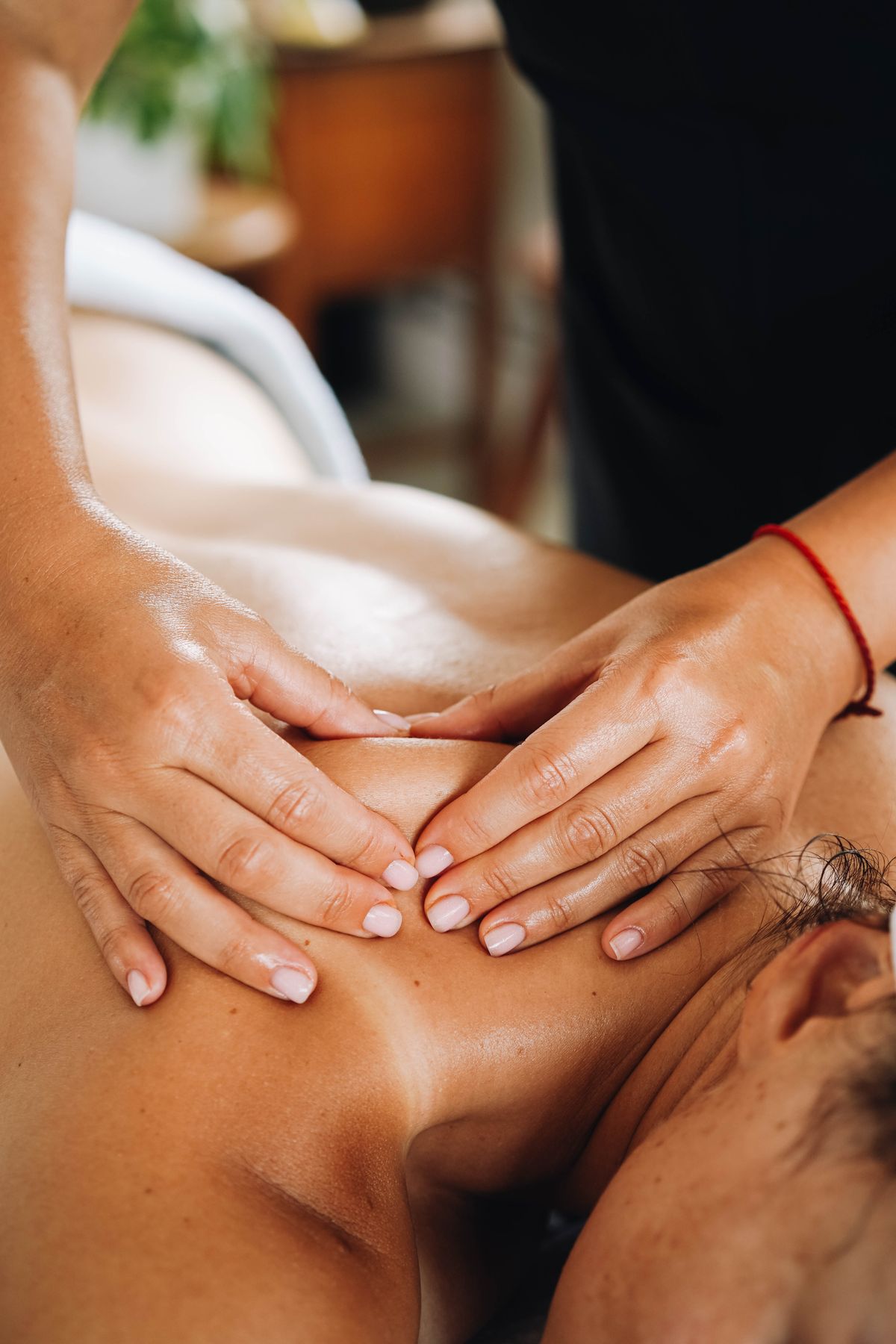 Close-up of a person receiving a warm oil body massage, reflecting the Ayurvedic practice of abhyanga
How to Start: A Practical Framework
The classical texts are explicit: the value of Dinacharya lies in daily repetition, not in occasional thoroughness. A five-minute routine performed every morning for a year produces more cumulative benefit than a ninety-minute routine performed sporadically. The nervous system responds to regularity — and Vata, the dosha most responsible for chronic imbalance in modern lifestyles, is specifically pacified by routine itself.
Here is a practical path for building your Dinacharya:
- Week 1–2: Wake 15 minutes earlier. Drink warm water. Scrape your tongue with a copper scraper (five strokes). This takes under five minutes.
- Week 3–4: Add oil pulling — five minutes of swishing sesame or coconut oil while you prepare for the day.
- Week 5–6: Introduce a brief abhyanga — even five minutes of warm oil on the feet, hands, and scalp before your shower.
- Week 7+: Add gentle movement and five minutes of seated breathwork or meditation.
Within two months, you will have a morning practice that addresses oral health, nervous system regulation, skin nourishment, digestive activation, and mental clarity — all before breakfast.
A Practice, Not a Performance
Dinacharya is not a productivity hack. It is not a wellness trend to optimise your morning. It is a practice of attunement — a way of listening to the body's needs at the precise moment they arise and responding with care. The classical texts understood that health is not built in dramatic interventions but in the quiet accumulation of daily acts, repeated with intention, across the arc of a lifetime.
Sources & Further Reading
Research
- Pedrazzi, V. et al. (2004). Tongue-Cleaning Methods: A Comparative Clinical Trial Employing a Toothbrush and a Tongue Scraper. Journal of Periodontology. View on PubMed
- Van der Sleen, M.I. et al. (2006). A Cochrane Systematic Review Finds Tongue Scrapers Have Short-Term Efficacy in Controlling Halitosis. Journal of Evidence-Based Dental Practice. View on PubMed
- Hedman, E. et al. (2025). The Plaque Reducing Efficacy of Oil Pulling with Sesame Oil: A Randomized-Controlled Clinical Study. Clinical Oral Investigations. View on PMC
- Basler, A.J. (2011). Pilot Study Investigating the Effects of Ayurvedic Abhyanga Massage on Subjective Stress Experience. Journal of Alternative and Complementary Medicine. View on PubMed
- Chauhan, A. et al. (2022). Ayurveda Daily Regimen Practices (Dinacharya): A Scientific System Model Approach Suitable as a Quaternary Prevention Strategy. ResearchGate. View on ResearchGate
Further Reading
- Dinacharya: Daily Routine for Preservation of Health — Charaka Samhita Online
- Circadian Rhythms and Ayurveda: An Integrated Perspective — Sankalpa Ayurveda
- Nobel Prize Validates the Ayurvedic Circadian Clock — LifeSpa
Image Credits
- Cover: Hot spiced tea with lemon and star anise — Pexels
- Woman meditating on a tree log — Pexels
- Person receiving a body massage — Pexels
All images free to use under the Pexels License.