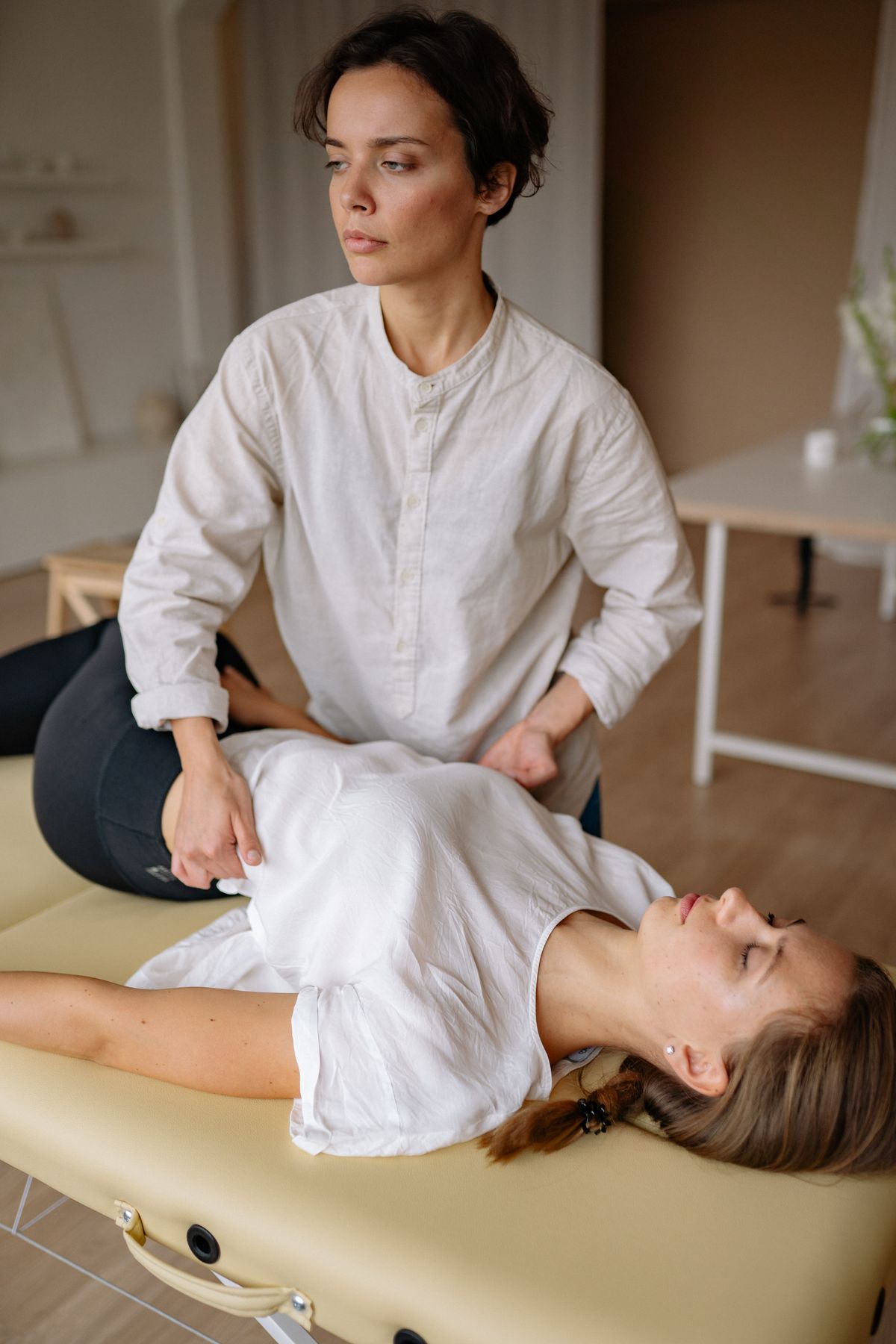
Walking into any therapy for the first time can feel like stepping into the unknown — and craniosacral therapy (CST) is perhaps more mysterious than most. There is no cracking, no deep pressure, no undressing. Just a quiet room, a pair of hands, and a form of listening so subtle it can seem almost impossible. Yet what happens on that table can shift something deep. Here is what your first session actually looks like, from the moment you arrive to the days that follow.
What Craniosacral Therapy Actually Is
Craniosacral therapy works with the craniosacral system — the membranes and cerebrospinal fluid that surround and protect the brain and spinal cord. This system has its own subtle rhythm, distinct from breathing or heartbeat, and when restrictions develop in these tissues — through injury, stress, or postural habits — the rhythm becomes compromised, and symptoms follow.
A CST practitioner uses extremely light touch, approximately five grams of pressure (about the weight of a small coin), to detect restrictions and facilitate their release. The technique was systematised by osteopathic physician John E. Upledger in the 1970s, building on earlier cranial osteopathy work, and has since been supported by a growing body of clinical research. A 2019 meta-analysis of ten randomised controlled trials found that CST produced significant medium-sized effects on pain intensity (SMD = −0.63), functional disability (SMD = −0.54), and quality of life, with benefits persisting at six-month follow-up.
Before You Arrive
Preparation is simple. Wear loose, comfortable clothing — soft trousers and a relaxed top are ideal. Avoid tight jeans, heavy belts, or restrictive fabrics. You will remain fully clothed for the entire session, so choose something you could comfortably fall asleep in.
Stay well hydrated in the hours beforehand. The fascial and membrane tissues respond better when the body is not dehydrated. Avoid caffeine or heavy meals immediately before your appointment if possible — not as a strict rule, but because a lighter, calmer body tends to respond more freely.
It helps to arrive a few minutes early to settle. The transition from a busy day to a treatment table is itself part of the process.
The Initial Conversation
Your first session begins not on the table but in a chair. The practitioner will ask about your health history, current symptoms, and what brought you to CST. This is not a formality — it shapes the session. Pain patterns, past injuries, surgeries, emotional stress, sleep quality: all of these inform where the practitioner listens first and what the body might need to express.
Be as open as you are comfortable being. There are no wrong answers, and nothing you share will surprise an experienced practitioner. If you are unsure what is relevant, mention it anyway — the body often connects symptoms in ways the mind does not expect.
 Woman lying peacefully on a massage table in a calm, softly lit treatment room
What Happens on the Table
You lie face up on a padded treatment table, fully clothed. Some practitioners offer a bolster under the knees and a light blanket — small comforts that help the nervous system feel safe enough to let go.
The practitioner then places their hands at specific listening stations along the body, following a structured protocol:
| Contact Point | What the Practitioner Assesses |
|---|---|
| Feet | Overall craniosacral rhythm, symmetry, vitality |
| Pelvic diaphragm | Restrictions in the lower trunk and sacrum |
| Respiratory diaphragm | Breathing restrictions, thoracic tension |
| Thoracic inlet | Upper chest and shoulder holding patterns |
| Cranial base (occiput) | Deep tension at the junction of skull and spine |
| Cranial vault | Restrictions in the bones and membranes of the skull |
At each station, the practitioner is not pushing, pressing, or manipulating. They are listening — feeling for the subtle rhythm of cerebrospinal fluid movement and identifying where it is restricted, asymmetrical, or diminished. When a restriction is found, they hold gently until the tissue releases on its own. This is not forced; it is facilitated.
The entire process is quiet. There is very little talking once treatment begins. Most sessions last 45 to 60 minutes.
What You Might Feel
This is where first-timers are often surprised. Despite the lightness of touch, the body frequently responds in unmistakable ways:
- Deepening breath — without any conscious effort, your breathing slows and drops into the belly
- Warmth or gentle heat — particularly under the practitioner's hands or spreading through a limb
- Subtle pulsations — a rhythmic movement that is neither heartbeat nor breathing
- A floating sensation — as if the body has become lighter or the table has dissolved
- Muscle softening — the jaw unclenches, the shoulders drop, the lower back releases
- Drifting between wakefulness and sleep — a deeply restorative state the nervous system enters when it feels safe
Some people experience emotional release — a wave of sadness, a spontaneous sigh, tears without a story attached, or a quiet sense of relief. This is normal and welcome. The body stores experience in its tissues, and when those tissues release, the emotions held within them may surface briefly. There is nothing to do with these feelings except let them pass.
A 2016 sham-controlled trial on chronic neck pain found that 78% of participants receiving CST achieved clinically meaningful pain reduction after eight weekly sessions, with 48% reporting substantial benefit — improvements that persisted at three-month follow-up.
 Woman lying on a massage table and smiling after a relaxing treatment session
After Your First Session
When the practitioner lifts their hands, there is no abrupt ending. You will be given time to return slowly — a minute or two of stillness before sitting up. Many people describe feeling deeply relaxed but unusually clear, as though the volume on mental noise has been turned down.
In the hours and days following your first session, you may notice:
- Deeper sleep — often on the very first night
- Mild fatigue or emotional sensitivity — lasting 24 to 48 hours as the body integrates changes
- Temporary increase in symptoms — this is uncommon but possible, and typically brief
- Increased body awareness — noticing tension patterns you had not previously registered
- A sense of spaciousness — in the head, the chest, or the spine
Drink plenty of water after your session. Avoid intense exercise or stressful commitments for the rest of the day if possible. The body is continuing to process what happened on the table, and giving it space to do so deepens the benefit.
Is Craniosacral Therapy Right for You?
CST is considered very safe — a systematic review of clinical trials reported no serious adverse events across 681 participants. It is suitable for people of all ages, from infants to the elderly, and is particularly well-suited for those who find deeper bodywork too stimulating or who carry trauma in the body.
It is commonly sought for chronic pain, migraines, anxiety, insomnia, jaw tension (TMJ), post-concussion symptoms, and stress-related conditions. A double-blind trial with fibromyalgia patients found significant improvements in both anxiety and sleep quality that persisted at six-month and one-year follow-ups.
The only absolute contraindications are conditions involving acute intracranial bleeding, recent skull fracture, or cerebral aneurysm. If you are uncertain, consult your doctor before booking.
The Quietest Medicine
Craniosacral therapy asks very little of you. You do not need to understand it, believe in it, or do anything at all. You simply lie down, breathe, and allow a trained pair of hands to listen to what your body has been trying to say. For many people, that first session is a revelation — not because something dramatic happens, but because something finally stops. The holding, the bracing, the low hum of tension that had become so familiar it was invisible. In that quiet, the body remembers what ease feels like. And that is where healing begins.
Sources & Further Reading
Research
- Haller, H. et al. (2019). Craniosacral therapy for chronic pain: a systematic review and meta-analysis of randomized controlled trials. BMC Musculoskeletal Disorders. View on PMC
- Heidenreich, T. et al. (2016). Craniosacral Therapy for the Treatment of Chronic Neck Pain: A Randomized Sham-controlled Trial. The Clinical Journal of Pain. View on PMC
- Matarán-Peñarrocha, G. et al. (2011). Influence of Craniosacral Therapy on Anxiety, Depression and Quality of Life in Patients with Fibromyalgia. Evidence-Based Complementary and Alternative Medicine. View on PMC
- Upledger, J.E. (1995). CranioSacral Therapy. Physical Therapy, 75(4), 328–330.
Further Reading
- Craniosacral Therapy: Uses and Effectiveness — Medical News Today
- Craniosacral Therapy Technique: What Is It, Benefits & Risks — Cleveland Clinic
- What to Expect at Your First Craniosacral Therapy Visit — Touch Education
Image Credits
- Cover: Therapist working on a patient on a therapy bed — Pexels
- Woman lying on a massage table — Pexels
- Woman lying on a massage table and smiling — Pexels
All images free to use under the Pexels License.