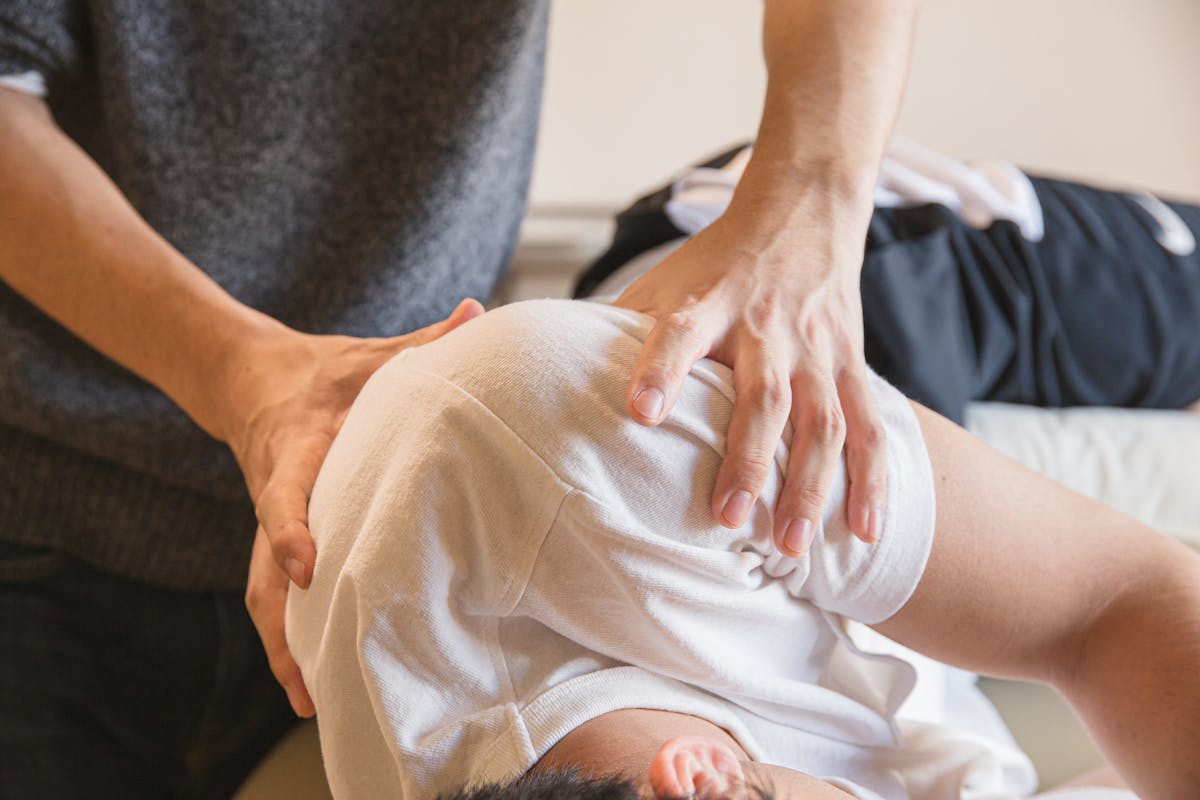
"Is pregnancy massage safe?" It is one of the most common questions expectant mothers ask — and the short answer, supported by decades of research and thousands of years of Ayurvedic tradition, is yes, for the overwhelming majority of healthy pregnancies. But the nuances matter. Understanding when massage is safe, which techniques to avoid, and how to choose a qualified therapist can mean the difference between a deeply beneficial experience and an unnecessary risk.
What the Research Tells Us
Modern science has examined this question rigorously. A 2021 systematic review by Mueller and Grunwald, published in the Journal of Clinical Medicine, analysed 12 randomised controlled trials involving prenatal massage and found no serious adverse effects reported across any study. The review confirmed that relaxation massage during pregnancy is safe when performed by trained professionals, with only minor, self-resolving side effects — such as temporary soreness or mild drowsiness — occasionally noted.
A 2020 meta-analysis by Hall et al. in Midwifery reached similar conclusions, finding that massage therapy not only posed no meaningful risk but produced moderate reductions in both anxiety and depression among pregnant participants. The researchers called for more high-quality studies but emphasised that the existing evidence supports safety when basic precautions are observed.
Tiffany Field's decades of research at the Touch Research Institute have consistently demonstrated that bi-weekly massage sessions reduce cortisol by measurable margins, increase dopamine and serotonin, and — perhaps most remarkably — are associated with 75% lower prematurity rates in depressed pregnant women receiving regular massage compared to controls.
The science is clear: when performed correctly, pregnancy massage is not only safe — it is protective.
 Pregnant woman relaxing peacefully at home with a book
A Trimester-by-Trimester Safety Guide
The safety profile of pregnancy massage shifts as the pregnancy progresses. Here is what you need to know at each stage.
| Trimester | Safety Status | Key Considerations |
|---|---|---|
| First (weeks 1–12) | Safe with caution | Most therapists wait until week 13 as a precaution. Light touch only. Avoid specific ankle and wrist acupressure points. |
| Second (weeks 13–27) | Widely considered safe | Ideal time to begin regular sessions. Side-lying positioning recommended after week 20. Moderate pressure permitted. |
| Third (weeks 28–40) | Safe up to due date | Weekly sessions beneficial for pain and swelling. Left side-lying preferred to optimise placental blood flow. Avoid deep leg work. |
First trimester: The hesitancy around early pregnancy massage is largely precautionary, not evidence-based. There is no known mechanism by which gentle massage can cause a miscarriage — early losses are overwhelmingly chromosomal. However, many certified prenatal therapists prefer to begin work after week 12–13, and it is always wise to obtain your healthcare provider's approval first.
Second trimester: Once the placenta is fully formed, the natural risk window narrows significantly. This is the phase when most women begin their massage journey. Positioning matters — after approximately 20 weeks, lying flat on the back can compress the inferior vena cava, reducing blood flow to both mother and baby. A trained therapist will use side-lying, semi-reclined, or seated positions.
Third trimester: Far from being a time to stop, the third trimester is often when massage provides the greatest relief. Lower back pain, pelvic pressure, oedema, and poor sleep all respond well to therapeutic touch. Sessions can safely continue right up to the due date, provided no complications arise.
Areas and Techniques to Avoid
Not every massage technique is appropriate during pregnancy. Knowing what to avoid is as important as knowing what helps.
Deep tissue work on the legs is the most critical restriction. Pregnancy increases the risk of deep-vein thrombosis (DVT) due to changes in blood coagulation and slower venous return. Deep pressure on the calves or inner thighs could theoretically dislodge an undetected clot. Light, flowing strokes on the legs are safe; forceful kneading is not.
Specific acupressure points — particularly Spleen 6 (inner ankle), Large Intestine 4 (webbing between thumb and index finger), and Bladder 60 (behind the outer ankle) — are traditionally associated with stimulating uterine contractions. While the evidence is largely anecdotal, trained prenatal therapists routinely avoid these areas as a precaution.
The abdomen should be treated with extreme gentleness — light, nurturing strokes are acceptable, but no deep work. Hot stones, saunas, and overheated treatment rooms should also be avoided, as core body temperature elevation can pose risks to foetal development.
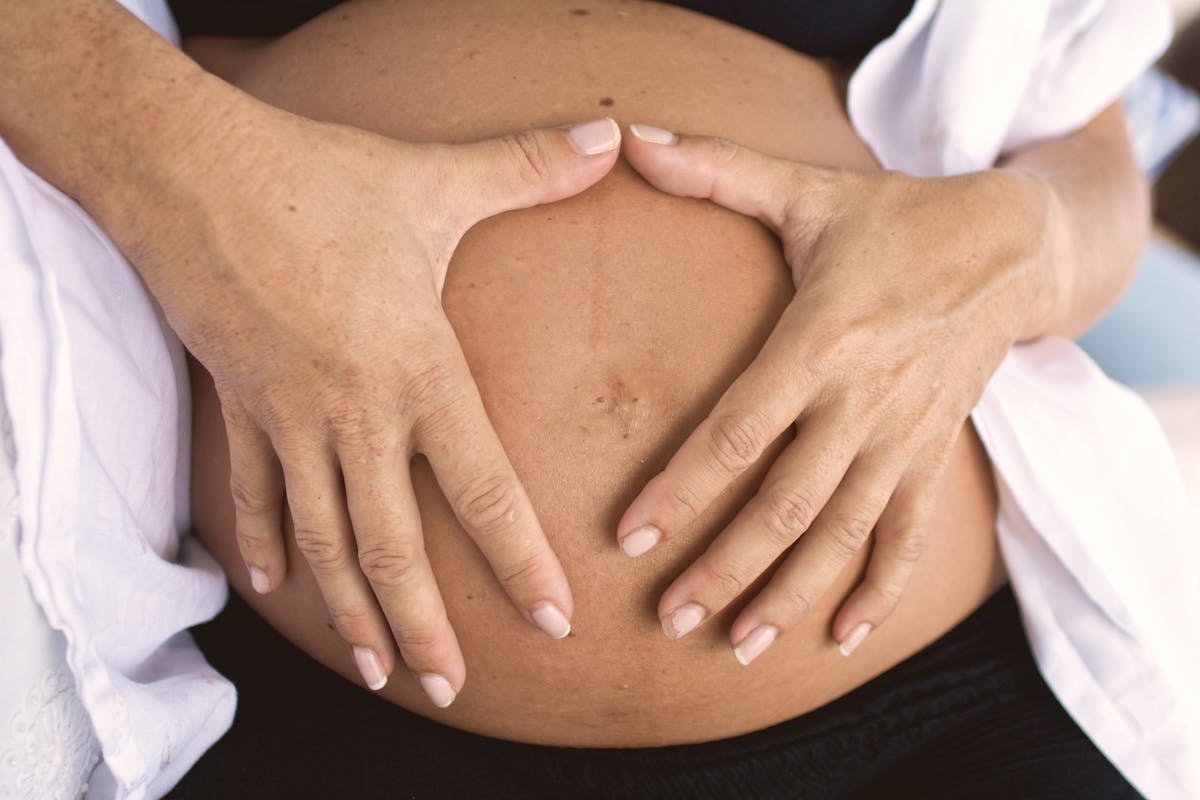 Expectant mother lovingly cradling her belly
The Ayurvedic Approach to Safe Pregnancy Massage
Ayurveda has addressed the safety of pregnancy massage for thousands of years. The classical texts describe Garbhini Paricharya — a complete pregnancy care regimen — that includes detailed guidance for safe therapeutic touch during each month of gestation.
In the Ayurvedic framework, pregnancy is a time of heightened Vata dosha, the force governing movement, the nervous system, and circulation. Garbhini Abhyanga — the Ayurvedic pregnancy massage — is specifically designed to calm Vata through warm, nourishing oils applied with gentle, rhythmic strokes. Traditional oils include sesame (warming and grounding), coconut (cooling, suited for Pitta constitutions), and preparations infused with Ashwagandha, Brahmi, or Shatavari — herbs chosen for their nourishing, stabilising properties.
The Ayurvedic approach inherently prioritises safety: treatments are tailored to the mother's prakriti (constitutional type), adjusted according to the trimester, and always performed with the lightest effective pressure. This individualised model aligns remarkably well with modern evidence-based safety guidelines — and it has been refined over millennia of continuous practice.
Conditions That Require Medical Clearance
Certain conditions mean that pregnancy massage should only proceed with explicit approval from your obstetrician or midwife:
- Preeclampsia or pregnancy-induced hypertension
- Placenta previa or any placental abnormality
- Deep-vein thrombosis or known clotting disorders
- Unexplained vaginal bleeding at any stage
- A history of or current risk of preterm labour
- Gestational diabetes with complications
- Severe, sudden-onset oedema (swelling)
- Fever or signs of active infection
If any of these apply, do not proceed without your doctor's clearance — and always provide your therapist with your complete medical history before the first session.
How to Choose a Qualified Therapist
The single most important factor in safe pregnancy massage is who performs it. A standard massage qualification does not automatically include prenatal training. Look for a therapist who holds a specific prenatal or perinatal massage certification — this means they have studied pregnancy anatomy, contraindications, safe positioning, and appropriate techniques for each trimester.
Ask whether they have experience with high-risk pregnancies, whether they use pregnancy-specific cushioning systems or side-lying protocols, and whether they are willing to communicate with your healthcare provider if needed. A qualified therapist will also ask you detailed questions about your medical history — this is a mark of professionalism, not an inconvenience.
In the Ayurvedic tradition, a Garbhini Abhyanga practitioner is trained to assess the mother's constitution and adapt the session accordingly — a level of personalisation that reflects the depth of care pregnancy deserves.
Pregnancy massage, performed safely, is not a luxury — it is a form of care that honours the extraordinary work a woman's body is doing. With the right therapist, the right techniques, and an informed understanding of what to expect, it becomes one of the most supportive practices available during the journey toward birth.
Sources & Further Reading
Research
- Mueller, S.M. & Grunwald, M. (2021). Effects, Side Effects and Contraindications of Relaxation Massage during Pregnancy: A Systematic Review of Randomized Controlled Trials. Journal of Clinical Medicine, 10(16), 3485. View on PMC
- Hall, H.G. et al. (2020). The effectiveness of massage for reducing pregnant women's anxiety and depression; systematic review and meta-analysis. Midwifery, 90, 102818. View on PubMed
- Field, T. (2010). Pregnancy and labor massage. Expert Review of Obstetrics & Gynecology, 5(2), 177–181. View on PMC
- Field, T. et al. (2009). Pregnancy massage reduces prematurity, low birthweight and postpartum depression. Infant Behavior and Development, 32(4), 454–460. View on PubMed
Further Reading
- Is Massage Safe During Pregnancy? — UT Southwestern Medical Center
- Prenatal Massage: Benefits, Types and What To Expect — Cleveland Clinic
- Prenatal Massage: Expert Benefits & Safety Rules — American Pregnancy Association
- Safety Considerations of Massage During Pregnancy — My Expert Midwife
Image Credits
- Cover: Therapist performing a professional massage — Pexels
- Pregnant woman relaxing at home with a book — Pexels
- Pregnant belly with hands forming a heart — Pexels
All images free to use under the Pexels License.