
In Ayurveda, there is a substance so fundamental to life that the classical texts declare its complete loss incompatible with survival. That substance is Ojas — the vital essence of immunity, vitality, and resilience that represents the deepest expression of health in the Ayurvedic system. While modern medicine measures immunity through white blood cell counts and antibody titres, Ayurveda has always understood that true resilience emerges from something deeper: a holistic integration of physical nourishment, emotional stability, and the body's capacity to transform food into life force. Modern psychoneuroimmunology is now reaching remarkably similar conclusions — and the parallels between Ojas and what science calls immune resilience are striking.
What Ojas Is — And Why It Matters
The Sanskrit word ojas translates as "vigour" or "essence of vitality." In the Ayurvedic framework, Ojas is the final, most refined product of digestion and metabolism — the subtle essence that remains after food has been sequentially transformed through all seven tissue layers (Saptadhatus): plasma (Rasa), blood (Rakta), muscle (Mamsa), fat (Meda), bone (Asthi), marrow and nerve (Majja), and reproductive tissue (Shukra).
This metabolic cascade is not rapid. Classical texts describe the complete production of Ojas as a month-long process, with each tissue layer nourishing the next through the action of specific tissue-level digestive fires (Dhatvagnis). This is why building deep, lasting vitality is never a quick fix — it requires sustained, consistent nourishment over time.
Ayurveda recognises two forms of Ojas:
| Type | Location | Quantity | Function |
|---|---|---|---|
| Para Ojas | Heart | Eight drops (classical measure) | Sustains life itself; its loss is fatal |
| Apara Ojas | Circulates throughout the body | Half an anjali (roughly a handful) | Governs immune strength, tissue nourishment, and overall vitality |
Ojas exists within a triad alongside Prana (the subtle essence of Vata, governing life force and breath) and Tejas (the subtle essence of Pitta, governing transformation and intelligence). Together, these three master forces operate beneath the level of the doshas, governing the deepest layers of physiological and psychological function.
The Causes and Signs of Ojas Depletion
The Charaka Samhita, one of Ayurveda's foundational texts, identifies specific causes of Ojas depletion with remarkable precision: chronic stress and sustained negative emotions (anger, grief, fear); inadequate or disrupted sleep; overexertion beyond the body's current capacity; fasting or undernourishment; excessive sensory stimulation; and the accumulation of Ama (metabolic toxins) in the body's channels.
The signs of depleted Ojas unfold in stages. Early signs are subtle: persistent fatigue, a dull complexion, low enthusiasm, and difficulty concentrating. As depletion deepens, more pronounced symptoms emerge — weakened immunity (catching infections easily and recovering slowly), anxiety and emotional instability, mental fog, dry skin, and a general sense of vulnerability. In its most severe form, Ayurveda describes Ojo-kshaya — a state of advanced depletion characterised by confusion, wasting, tissue degeneration, and profound loss of vitality.
By contrast, a person with robust Ojas radiates health: bright eyes, glowing complexion, strong and stable digestion, deep restful sleep, emotional equanimity, mental clarity, consistent energy, and strong immunity. These individuals rarely fall ill, and when they do, they recover quickly.
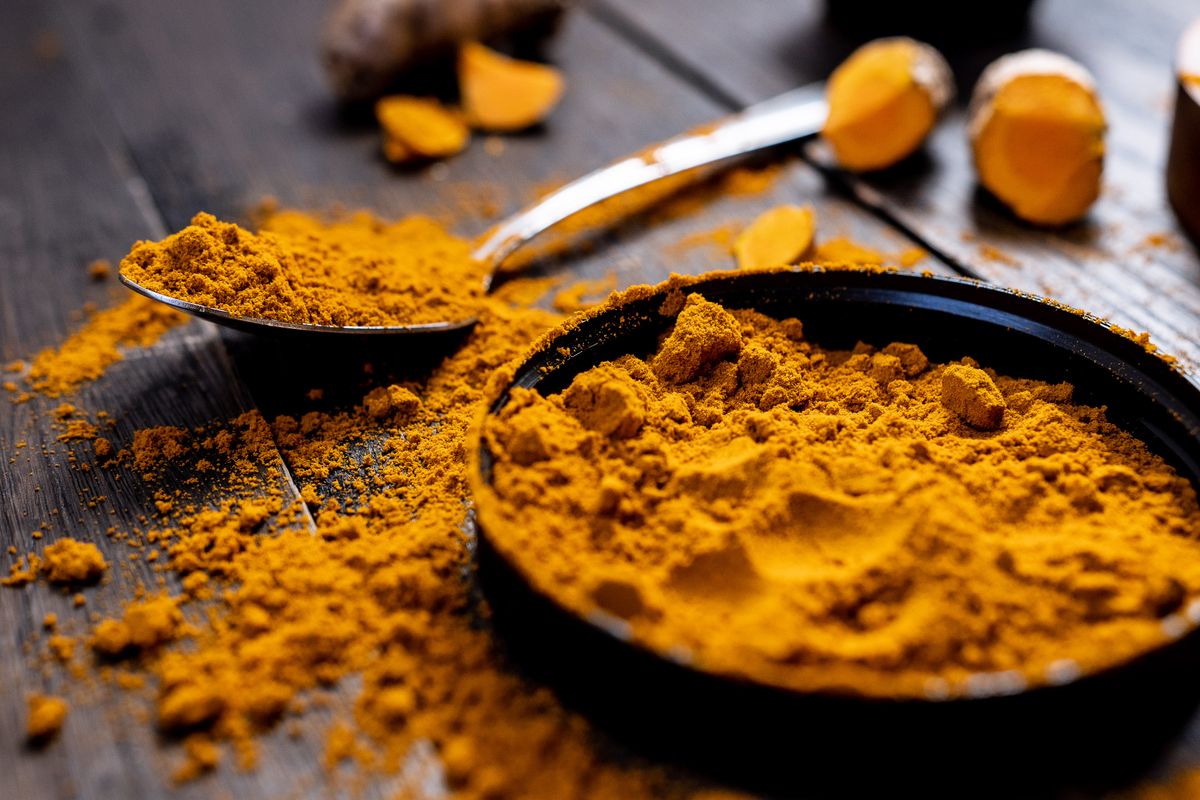 Close-up of turmeric powder and root on a rustic wooden surface, representing the Rasayana herbs that Ayurveda uses to build and protect Ojas
Building Ojas: Diet and Rasayana Herbs
Because Ojas is the end product of perfect digestion, Agni (digestive fire) is the essential prerequisite. The most nourishing foods in the world cannot build Ojas if digestion is impaired. This is why Ayurveda always addresses Agni first — through regular meal timing, proper food combining, and the avoidance of Ama-producing habits — before introducing Ojas-building protocols.
Ojas-Building Foods
The foods that nourish Ojas are generally sweet, unctuous, and easy to digest. Classical and traditional sources emphasise:
- Ghee — considered the foremost Ojas-building substance, it enhances Agni while nourishing all seven Dhatus
- Soaked and peeled almonds — traditionally prepared by soaking overnight and removing the skin to improve digestibility
- Dates, figs, and raisins — naturally sweet, mineral-rich, and deeply nourishing
- Organic whole milk — warm, fresh, and spiced with cardamom or turmeric
- Basmati rice and whole grains — providing steady, Sattvic nourishment
- Mung dal — the easiest legume to digest, often used in Ayurvedic healing diets
- Fresh seasonal fruits — especially pomegranates, mangoes, and ripe bananas
- Honey (raw, unheated) and sesame seeds
Equally important is how you eat. Food should be fresh, cooked, eaten in a calm environment, chewed thoroughly, and consumed at consistent times. Processed foods, leftovers, excess raw food, and eating while distracted or emotionally agitated all impair the Agni that Ojas production depends upon.
Rasayana: The Science of Rejuvenation
Rasayana is the specific Ayurvedic branch of therapy devoted to rebuilding Ojas and promoting longevity. Rasayana herbs nourish the deepest tissue layers, enhance immune resilience, and counteract the degenerative effects of stress and ageing.
| Herb | Sanskrit/Latin | Primary Action | Research Highlights |
|---|---|---|---|
| Ashwagandha | Withania somnifera | Adaptogen; modulates HPA axis, reduces cortisol | Meta-analyses confirm significant cortisol and anxiety reduction (BJPsych Open, 2025) |
| Amalaki | Emblica officinalis | Premier Ojas Rasayana; antioxidant, immunomodulator | Rich in stable vitamin C and polyphenols; demonstrated anti-inflammatory and immunomodulatory effects |
| Shatavari | Asparagus racemosus | Cooling tonic; nourishes reproductive and digestive systems | Traditional Rasayana for Pitta constitutions and hormonal balance |
| Guduchi | Tinospora cordifolia | Immunomodulator; clears Ama while building Ojas | Preclinical studies show immunostimulatory and hepatoprotective activity |
Chyavanprash, the classical Rasayana jam formulated around Amalaki and containing dozens of supporting herbs, has been the subject of growing clinical interest. A 2024 systematic review and meta-analysis published in Cureus, analysing five randomised controlled trials with over 153,000 participants, evaluated Chyavanprash as a prophylactic intervention. The review documented immunostimulatory effects including enhanced NK cell activity and cytokine modulation, and noted that Rasayana formulations act through antioxidant, adaptogenic, and immunoadjuvant mechanisms.
Ojas and Modern Science: The Psychoneuroimmunology Connection
The most compelling modern framework for understanding Ojas is psychoneuroimmunology (PNI) — the field that studies the bidirectional communication between the nervous system, the endocrine system, and the immune system. PNI research has demonstrated, with increasing precision, that psychological states directly influence immune function — a relationship Ayurveda described millennia ago through the lens of Ojas.
The landmark Segerstrom and Miller meta-analysis (2004), published in Psychological Bulletin and analysing over 300 empirical studies spanning 30 years, established that:
- Acute stressors (lasting minutes) produce adaptive upregulation of some innate immune parameters
- Brief naturalistic stressors (such as exams) suppress cellular immunity while preserving humoral immunity
- Chronic stressors suppress both cellular and humoral immunity, with particularly consistent effects on natural killer (NK) cell cytotoxicity
Subsequent research has shown that chronic stress reduces NK cell cytotoxicity by up to 50%, impairs wound healing, reduces vaccine response, and increases susceptibility to upper respiratory infections. The primary mechanism involves cortisol dysregulation via the HPA axis — chronic activation leads to sustained cortisol elevation, which shifts the immune system toward suppression and pro-inflammatory states.
This maps directly onto the Ayurvedic model: the Charaka Samhita's list of Ojas-depleting factors — chronic stress, negative emotions, sleep deprivation, overexertion — corresponds precisely to the factors PNI research has identified as immunosuppressive. Conversely, the Ojas-building practices Ayurveda prescribes — nourishing diet, adequate sleep, meditation, emotional balance, and Rasayana herbs — correspond to the interventions shown to enhance immune resilience in clinical studies.
 Woman meditating peacefully outdoors in a lush green setting, representing the mindfulness and lifestyle practices that Ayurveda prescribes for building Ojas
A Daily Framework for Cultivating Ojas
Building Ojas is not a single intervention but a sustained way of living. The following framework integrates classical Ayurvedic guidance with the principles validated by modern research:
Nourish Agni First
Strong Ojas requires strong digestion. Eat at regular times, favour cooked and warm foods, avoid overeating, and include digestive spices — ginger, cumin, fennel — that kindle Agni without aggravating Pitta.
Prioritise Sleep
Sleep is among the most powerful Ojas-building activities. Ayurveda recommends retiring by 10 PM (before the Pitta period begins) and rising early during the Brahma Muhurta (approximately 90 minutes before sunrise). Modern sleep research confirms that consistent sleep timing and adequate duration are critical for immune function, cortisol regulation, and cellular repair.
Practice Meditation and Pranayama
A calm, Sattvic mind builds Ojas; a stressed, Rajasic or Tamasic mind depletes it. Daily meditation — even 10–20 minutes — and Nadi Shodhana (alternate nostril breathing) activate the parasympathetic nervous system, reduce cortisol, and create the internal conditions under which Ojas can accumulate.
Include Rasayana Support
A daily teaspoon of Chyavanprash in the morning, warm milk with Ashwagandha in the evening, or regular use of Amalaki provides gentle, sustained Rasayana support. These herbs work best within the context of a balanced diet and lifestyle — they are not substitutes for foundational practices.
Conserve and Replenish Vital Energy
Ayurveda emphasises Brahmacharya — the wise conservation of vital energy — as essential for Ojas. This extends beyond sexual energy to include the conservation of mental and emotional resources: reducing unnecessary sensory stimulation, spending time in nature, cultivating positive relationships, and allowing adequate time for rest and recovery.
The Deepest Layer of Health
The ancient Ayurvedic rishis understood something that modern science is only now beginning to articulate with precision: immunity is not merely a function of white blood cells and antibodies. True immune resilience emerges from the integration of physical nourishment, emotional stability, mental clarity, and the body's deep capacity to transform what it receives into vitality. They called this integrated resilience Ojas — and they developed an entire system of diet, herbs, daily practices, and seasonal adjustments to cultivate it. In an era of chronic stress, immune dysregulation, and the growing recognition that psychological states shape biological outcomes, the Ayurvedic science of Ojas offers something both ancient and urgently relevant: a framework for building the kind of deep, sustainable health that no single supplement or intervention can provide alone.
Sources & Further Reading
Research
- Segerstrom, S.C. & Miller, G.E. (2004). Psychological Stress and the Human Immune System: A Meta-Analytic Study of 30 Years of Inquiry. Psychological Bulletin, 130(4), 601–630. View on PubMed
- Sharma, S., Sethuraman, G. & Kumari, A. (2024). Safety and Efficacy of Chyawanprash as a Prophylaxis Treatment for COVID-19: A Systematic Review and Meta-Analysis of Randomized Control Trials. Cureus. View on PMC
- Koch, A. et al. (2024). Efficacy and Safety of Maharishi Amrit Kalash: A Systematic Review of Randomized Controlled Trials. Frontiers in Medicine. View on PMC
- Bachour, M. et al. (2025). Effects of Ashwagandha Supplements on Cortisol, Stress, and Anxiety Levels in Adults. BJPsych Open. View on PMC
- Irwin, M.R. & Slavich, G.M. (2017). Psychoneuroimmunology. In Handbook of Psychophysiology. View PDF
- The Role of Rasayana Kalpana in Immunomodulation: A Scientific and Ayurvedic Review. (2024). Journal of Ayurveda and Integrated Medical Sciences. View on JAIMS
Further Reading
- Concept of Ojas: A Scientific Analysis — JAIMS
- Review on Concept of Ojas in Ayurveda with Reference to Immunology — ResearchGate
- The Immunology — Ayurveda Perspective — Bentham Science
- Modern Woes, Ancient Wisdom: Balanced Ojas and the Prevention of Diseases — California College of Ayurveda
Image Credits
- Cover: Woman about to run during golden hour — Pexels
- Close-up shot of turmeric powder — Pexels
- Woman meditating in the outdoors — Pexels
All images free to use under the Pexels License.