
Pregnancy transforms every dimension of a woman's life — her body reshapes itself week by week, her hormones shift in ways that can feel overwhelming, and her mind navigates a landscape of anticipation, joy, and sometimes anxiety. In Ayurveda, this sacred period has been honoured for thousands of years with a specific practice: Garbhini Abhyanga, or pregnancy massage, a gentle, oil-based therapy designed to support both mother and child through every stage of gestation.
Modern science now confirms what Ayurvedic practitioners have long understood — that the simple, intentional act of therapeutic touch during pregnancy can profoundly reduce stress, ease pain, and improve outcomes for both mother and baby.
The Ayurvedic Roots of Pregnancy Massage
In the Ayurvedic tradition, pregnancy is considered a uniquely delicate and spiritually significant time. The classical texts — including the Charaka Samhita and Sushruta Samhita — describe specific protocols for caring for the expectant mother, known as Garbhini Paricharya (pregnancy care regimen).
Garbhini Abhyanga is a cornerstone of this care. The term combines Garbhini (pregnant woman) with Abhyanga (oil massage), and the practice involves the application of warm, herb-infused oils selected according to the mother's prakriti (constitutional type) and the predominant dosha that needs balancing. Sesame oil is frequently used as a base for its warming, grounding qualities — particularly beneficial for calming the Vata dosha, which Ayurveda considers the primary force governing movement, circulation, and the nervous system during pregnancy.
From the sixth month onwards, regular Abhyanga is traditionally believed to support easier labour, improve skin elasticity, and nourish the developing tissues of the baby through the mother's enhanced circulation.
What the Science Says
The past two decades have produced a substantial body of research validating prenatal massage. A 2021 systematic review by Mueller and Grunwald, published in the Journal of Clinical Medicine, examined 12 randomised controlled trials and concluded that regular relaxation massage during pregnancy significantly reduced anxiety, depression, and physical pain — with no serious side effects reported. The review noted higher dopamine and serotonin levels and lower cortisol and norepinephrine in massaged participants.
A 2020 meta-analysis by Hall et al., published in Midwifery, analysed eight studies and found a moderate effect on depressive symptoms (mean difference of −5.95 on the CES-D scale) and a significant reduction in anxiety (standardised mean difference = −0.59). The authors described massage as a promising non-pharmacological option for pregnant women managing mental health symptoms.
Perhaps the most striking findings come from Tiffany Field's landmark research at the Touch Research Institute. Her 2010 review, published in Expert Review of Obstetrics & Gynecology, reported that among depressed pregnant women receiving regular massage, prematurity rates were 75% lower (0–4% versus 11–16% in control groups) and low birthweight incidence was 80% lower (2–4% versus 10–16%).
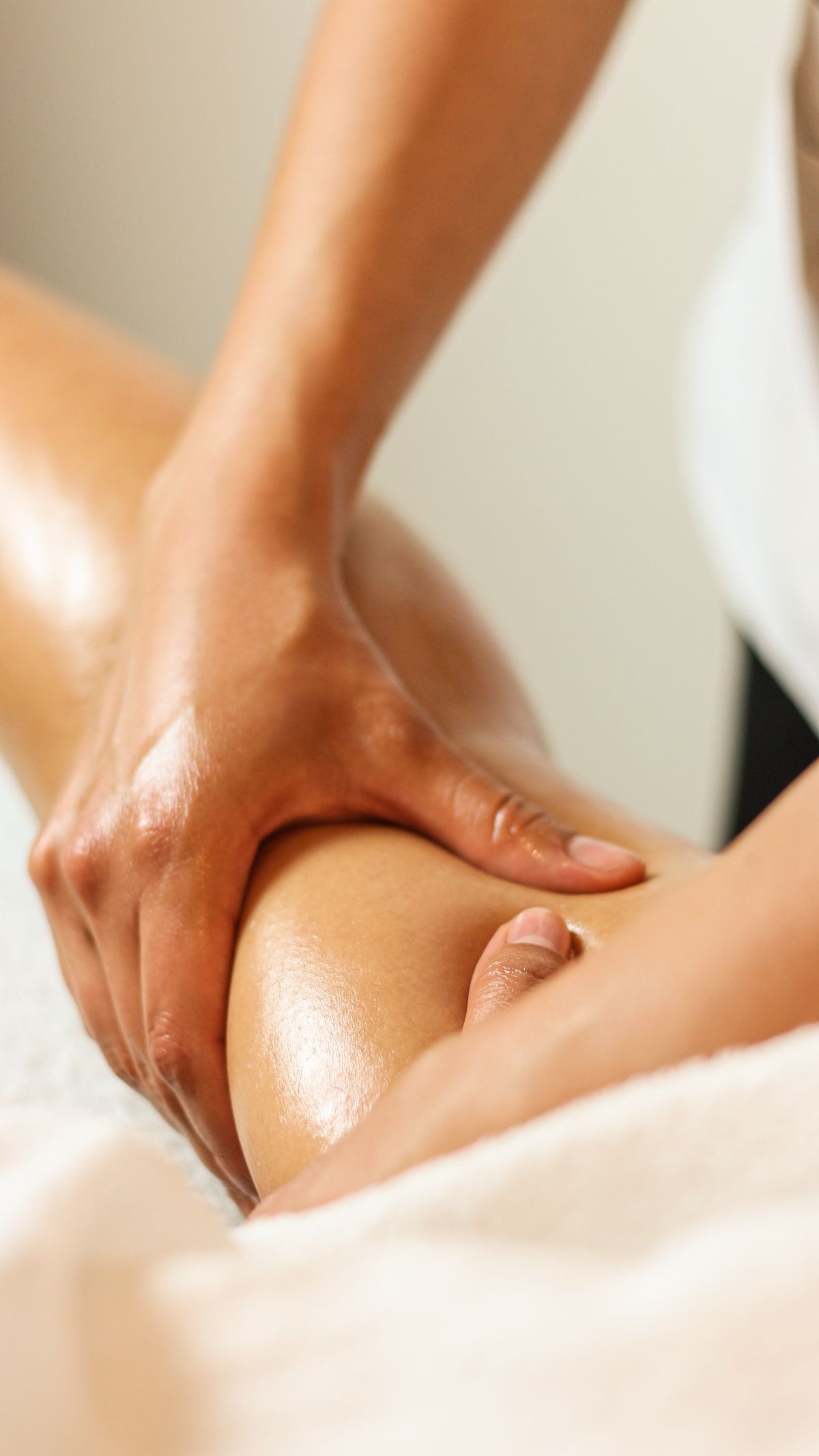 Therapist performing a gentle leg massage technique
Benefits at a Glance
| Benefit | What the Research Shows |
|---|---|
| Reduced anxiety & depression | SMD = −0.59 for anxiety; CES-D improvement of −5.95 for depression (Hall et al., 2020) |
| Lower cortisol levels | Significant cortisol reduction across multiple RCTs (Mueller & Grunwald, 2021) |
| Less back and leg pain | Consistent pain relief reported across all reviewed trials |
| Reduced prematurity risk | 75% lower prematurity in massage groups vs. controls (Field, 2010) |
| Higher birth weight | 80% lower incidence of low birthweight (Field, 2010) |
| Improved neonatal outcomes | Better scores on Brazelton Neonatal Behavioral Assessment scales |
| Shorter labour | Labour duration reduced by approximately three hours with massage support |
Safety Guidelines by Trimester
Pregnancy massage is widely considered safe for healthy, low-risk pregnancies — but certain guidelines apply.
First trimester (weeks 1–12): Most practitioners recommend waiting until after week 12, not because massage itself poses a risk, but because the natural miscarriage rate is highest during this period and therapists prefer to err on the side of caution. A certified prenatal massage therapist can provide gentle work during this stage if your healthcare provider approves.
Second trimester (weeks 13–27): This is the ideal time to begin regular sessions. Side-lying positioning with pillow support keeps you comfortable and avoids pressure on the vena cava. Light to moderate pressure is preferred — deep tissue work on the legs is avoided due to the increased risk of thrombosis during pregnancy.
Third trimester (weeks 28–40): Sessions can continue right up to the due date. Many women find weekly massage particularly beneficial during this phase, when lower back pain, pelvic pressure, and swelling are at their peak. Specific acupressure points on the ankles and wrists are avoided, as they are traditionally associated with stimulating uterine contractions.
When to Avoid Massage Entirely
Massage is contraindicated in cases of preeclampsia, placenta previa, deep-vein thrombosis, unexplained vaginal bleeding, fever, or any acute complication. Always consult your obstetrician or midwife before beginning any new therapeutic practice during pregnancy.
The Role of Touch in Emotional Well-Being
Beyond the measurable hormonal shifts, there is something deeply human about the role of touch during pregnancy. Ayurveda describes pregnancy as a time when a woman's Ojas — her vital essence and immunity — must be carefully nourished. Gentle, loving touch is considered one of the most powerful ways to sustain Ojas, supporting not only the mother's emotional resilience but also the energetic environment in which the baby develops.
Field's research supports this view from a neurobiological perspective: massage stimulates increased vagal activity through pressure receptor activation, which in turn regulates the autonomic nervous system and reduces cortisol secretion. The result is a calmer nervous system, improved sleep, and a greater sense of emotional equilibrium — benefits that extend to the developing child.
 Pregnant woman embracing nature in a serene outdoor setting
Bringing the Practice Home
You do not need a professional clinic to experience the benefits of pregnancy massage. Research has shown that partner-administered massage produces comparable reductions in cortisol, depression, and anxiety. A simple daily ritual of warm sesame oil applied to the feet, lower back, and shoulders — even for just ten minutes — can become a grounding practice that both parents share.
In the Ayurvedic tradition, this kind of daily self-care is not a luxury; it is a form of Dinacharya (daily routine) that honours the body's natural rhythms and prepares it for the demands of childbirth and motherhood. The act of slowing down, of offering warmth and attention to a body that is working extraordinarily hard, is itself a form of healing.
Pregnancy is not merely something to endure — it is a process to be supported, honoured, and nourished. Whether through a professional Garbhini Abhyanga session or a quiet evening ritual with warm oil and gentle hands, the practice of pregnancy massage offers a bridge between ancient wisdom and modern evidence, inviting both mother and child into a space of deeper calm.
Sources & Further Reading
Research
- Mueller, S.M. & Grunwald, M. (2021). Effects, Side Effects and Contraindications of Relaxation Massage during Pregnancy: A Systematic Review of Randomized Controlled Trials. Journal of Clinical Medicine, 10(16), 3485. View on PMC
- Hall, H.G. et al. (2020). The effectiveness of massage for reducing pregnant women's anxiety and depression; systematic review and meta-analysis. Midwifery, 90, 102818. View on PubMed
- Field, T. (2010). Pregnancy and labor massage. Expert Review of Obstetrics & Gynecology, 5(2), 177–181. View on PMC
- Field, T. et al. (2009). Pregnancy massage reduces prematurity, low birthweight and postpartum depression. Infant Behavior and Development, 32(4), 454–460. View on PubMed
Further Reading
- Prenatal Massage: Benefits, Types and What To Expect — Cleveland Clinic
- Prenatal Massage: Expert Benefits & Safety Rules — American Pregnancy Association
- Benefits of Massage During Pregnancy — AMTA
- Safety Considerations of Massage During Pregnancy — My Expert Midwife
Image Credits
- Cover: Pregnant woman enjoying a spa wellness treatment — Pexels
- Therapist performing a gentle leg massage — Pexels
- Pregnant woman embracing nature outdoors — Pexels
All images free to use under the Pexels License.