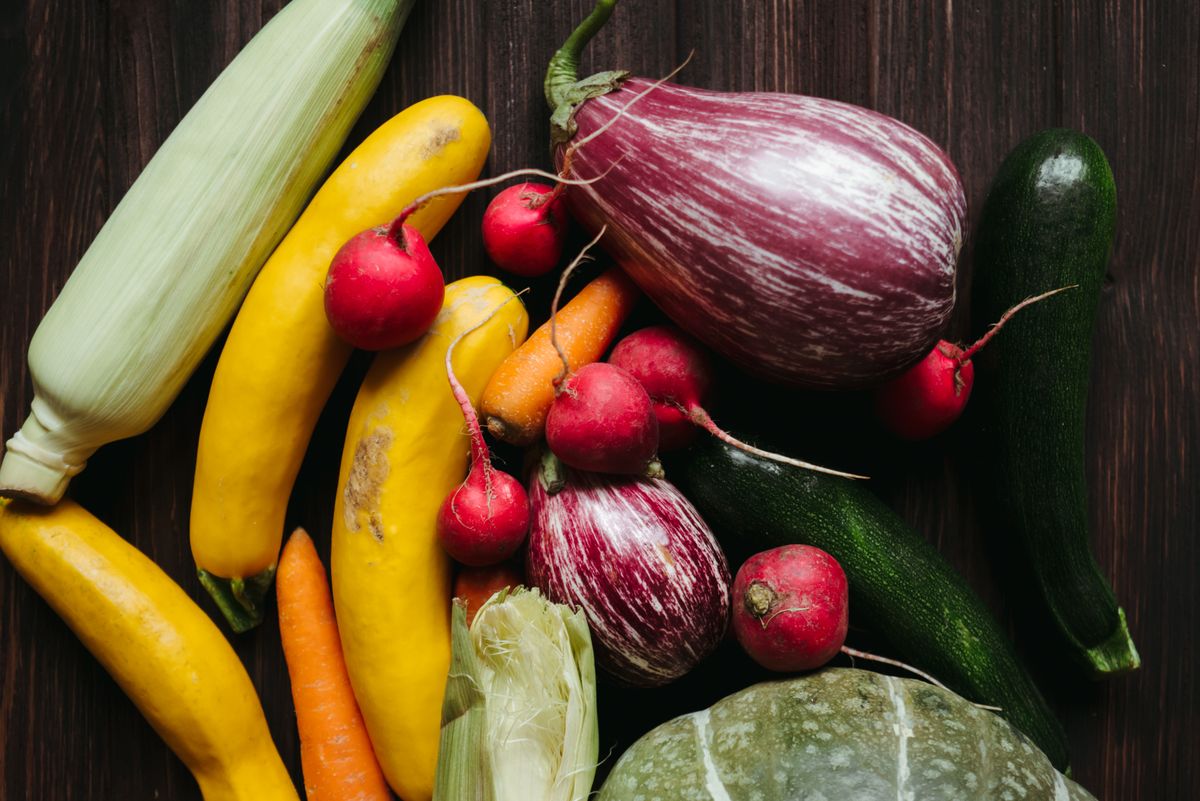
Long before modern science began measuring gut microbiome diversity across seasons or mapping circadian rhythms of digestive enzyme production, Ayurveda had already codified a comprehensive system for eating in harmony with nature's cycles. That system is Ritucharya — the seasonal regimen described in the Charaka Samhita and the Ashtanga Hridaya — and its central insight is deceptively simple: the foods that keep you healthy in January will not serve you in July. Your digestive fire, your dosha balance, your immune resilience, and even your gut microbiome shift with the seasons — and your diet must shift with them. Modern research in chronobiology, chrononutrition, and microbial ecology is now confirming what Ayurvedic practitioners have taught for millennia: seasonal eating is not a lifestyle trend. It is a biological imperative.
The Logic of Ritucharya: Seasons, Solstices, and Strength
The Sanskrit word Ritucharya combines Ritu (season) with Charya (conduct or regimen). Ayurveda divides the year into six seasons of approximately two months each, grouped into two solstice periods that determine the body's overall strength and vitality:
| Solstice Period | Seasons | Months (approx.) | Body Strength | Dominant Quality |
|---|---|---|---|---|
| Visarga Kala (Southern Solstice) | Varsha (Rainy), Sharad (Autumn), Hemanta (Early Winter) | Mid-July – Mid-January | Progressively increases | Moon dominant; cooling, nourishing |
| Adana Kala (Northern Solstice) | Shishira (Late Winter), Vasanta (Spring), Grishma (Summer) | Mid-January – Mid-July | Progressively decreases | Sun dominant; drying, depleting |
This framework reflects a fundamental Ayurvedic observation: Agni (digestive fire) is strongest in winter and weakest in summer and the monsoon season. During Hemanta and Shishira (winter), the external cold drives heat inward, concentrating digestive capacity. The body demands — and can efficiently process — heavy, nourishing foods. During Grishma (summer), the sun's intensity depletes moisture and energy, weakening Agni and requiring lighter, cooling nourishment.
The three doshas follow their own seasonal rhythm of Sanchaya (accumulation), Prakopa (aggravation), and Prashama (pacification). Kapha builds during winter's cold and moisture and liquefies in spring's warmth. Pitta accumulates during the monsoon's humidity and flares in autumn's sudden heat. Vata gathers during summer's dryness and destabilises during the rainy season's irregular weather. Ritucharya is designed to prevent each dosha from reaching the aggravation stage — intervening with appropriate diet and lifestyle during the accumulation phase.
Eating Through the Six Seasons
Hemanta and Shishira — Winter (Mid-November to Mid-March)
Winter is the season of peak digestive strength. The Charaka Samhita states that the body's Agni, driven inward by the cold, burns with exceptional intensity — and if not fed adequately, it will begin to consume the body's own tissues. This is the season for the most nourishing diet of the year.
Recommended: Sweet, sour, and salty tastes. Ghee, sesame oil, warm milk with spices, wheat, rice, urad dal, root vegetables, warming soups and stews, dates, nuts, and fermented foods. Warming spices — cinnamon, cloves, ginger, black pepper, nutmeg — should be used liberally.
Avoid: Cold, light, dry, and raw foods. Fasting and caloric restriction are contraindicated in winter.
 Assorted warming spices including cinnamon, cloves, and nutmeg on a dark surface, representing the digestive spices Ayurveda recommends for kindling Agni during the winter season
Vasanta — Spring (Mid-March to Mid-May)
As temperatures rise, the Kapha that accumulated during winter begins to liquefy. This flooding of Kapha dampens digestive fire, producing heaviness, congestion, allergies, and sluggish metabolism. Spring is the season for lightening and cleansing.
Recommended: Bitter, pungent, and astringent tastes. Old barley, wheat, honey, light soups, bitter greens, mung dal, and warming spices. Beverages like warm water with honey and digestive herbal infusions. This is the ideal season for Vamana (therapeutic emesis) — the Panchakarma procedure that clears accumulated Kapha.
Avoid: Heavy, sweet, sour, oily, and cold foods. New grains and excessive dairy. Daytime sleeping, which increases Kapha.
Grishma — Summer (Mid-May to Mid-July)
The sun's intensity depletes moisture, energy, and digestive strength. Vata begins to accumulate due to the drying quality of the season. The body requires cooling, hydrating, and light nourishment.
Recommended: Sweet, cool, and liquid foods. Fresh seasonal fruits, coconut water, buttermilk, rice, ghee (which is cooling despite being a fat), cucumbers, melons, mint, coriander, and fennel. Water-rich vegetables and light meals. Daytime napping is permitted — uniquely in this season — because nights are short and the body is depleted by heat.
Avoid: Pungent, sour, salty, and hot foods. Excessive exercise. Alcohol and fermented foods, which aggravate Pitta in the heat.
Varsha — Monsoon (Mid-July to Mid-September)
The rains bring humidity, irregular weather, and weakened Agni. Vata, which accumulated during summer, now becomes aggravated. Waterborne contamination increases, and the body is at its most vulnerable to digestive disorders and infections.
Recommended: Sour, salty, and mildly oily foods. Warm, freshly cooked meals — never raw or cold. Light gruels, mung dal soups, old grains (rice, barley), ginger-lemon water, and digestive spices like black pepper and asafoetida. This is the classical season for Basti (medicated enema therapy) to pacify aggravated Vata.
Avoid: Uncooked foods, heavy meals, excess water intake, and leftover or stale food. River water was historically cautioned against; the modern equivalent is heightened food safety awareness during the monsoon.
Sharad — Autumn (Mid-September to Mid-November)
Autumn brings sudden warmth after the monsoon's cool humidity. Pitta, which accumulated during Varsha, now liquefies and aggravates — producing skin rashes, acid reflux, inflammatory conditions, and irritability.
Recommended: Sweet, bitter, and astringent tastes. Rice, wheat, ghee, milk, grapes, pomegranate, moringa, bitter gourd, and cooling spices — coriander, fennel, cardamom. The classical texts specifically recommend Hamsodaka — water purified by exposure to moonlight and starlight — for Pitta pacification. This is the ideal season for Virechana (therapeutic purgation).
Avoid: Fermented foods, vinegar, excess sour fruits, alcohol, spicy preparations, and prolonged sun exposure.
 Vibrant sliced watermelons viewed from above, representing the cooling, hydrating fruits that Ayurveda recommends during the hot summer months to pacify Pitta and sustain moisture
Ritusandhi: The Art of Seasonal Transition
One of Ritucharya's most sophisticated concepts is Ritusandhi — the 14-day transitional window between two seasons (the last seven days of the outgoing season and the first seven of the incoming one). During Ritusandhi, Ayurveda prescribes a gradual shift in diet and lifestyle rather than an abrupt change. The practices of the previous season are progressively reduced while those of the next are slowly introduced.
This principle reflects an understanding that the body requires time to recalibrate its digestive, metabolic, and immune functions to new environmental conditions. Abrupt dietary shifts during seasonal transitions — which modern medicine now recognises as periods of heightened vulnerability to respiratory infections, allergic flares, and metabolic instability — can destabilise dosha balance and weaken Agni.
Modern Science Validates the Seasonal Body
The scientific validation of Ritucharya is emerging from several converging fields — and the alignment with Ayurvedic principles is remarkably precise.
Gut Microbiome and Seasonal Shifts
A 2021 peer-reviewed study published in the Journal of Ethnic Foods (Springer) systematically reviewed the influence of diet and climate on the human gut microbiome and concluded that Ritucharya practices are directly relevant to modulating the seasonal variation in gut microbiota. The authors noted that Ayurveda's theories of Agni and Ama correspond to modern understanding of microbial balance and dysbiosis — and that seasonal dietary adaptations prescribed by Ritucharya align with observed microbial shifts, such as increased Firmicutes during colder seasons and increased Bacteroidetes during warmer months.
A foundational study in the Hutterite population — a genetically homogeneous group with highly uniform diets — found significantly higher Bacteroidetes in summer compared to winter, driven primarily by increased consumption of fresh produce. A 2025 review in Microorganisms confirmed that seasonality is a key determinant of gut microbiome composition and function, with implications for immune regulation and chronic disease susceptibility.
Chronobiology and Circadian Nutrition
A 2025 integrated review in Frontiers in Microbiology detailed the bidirectional relationship between the circadian clock and the gut microbiome: the clock regulates antimicrobial peptides, immunoglobulin A (IgA), and hormones like cortisol and melatonin within the gut, creating a rhythmic immunological landscape that shapes microbial communities. Disruptions to this rhythm — through irregular eating, shift work, or seasonal misalignment — are associated with dysbiosis, metabolic dysfunction, and immune suppression.
The emerging field of chrononutrition (Frontiers in Nutrition, 2023; eFood/Wiley, 2025) has demonstrated that the timing and seasonal composition of meals significantly affects metabolic efficiency, insulin sensitivity, and cardiometabolic risk. The Charaka Samhita's observation that Agni peaks at midday and fluctuates with the seasons corresponds precisely to modern findings on circadian rhythms of digestive enzyme production and seasonal variation in metabolic rate.
Seasonal Immune Variation
Research has consistently shown that immune function varies seasonally. Vitamin D synthesis from sunlight peaks in summer and declines in winter. Inflammatory markers and susceptibility to autoimmune flares follow seasonal patterns. Upper respiratory infections cluster in the cold months — not merely because of pathogen exposure, but because immune surveillance itself is seasonally modulated. Ritucharya's emphasis on building strength and nourishing tissues during winter, cleansing accumulated Kapha in spring, and supporting weakened Agni during the monsoon maps directly onto these observed patterns.
Applying Ritucharya in a Modern Context
Ayurveda's six-season calendar was originally calibrated to the Indian subcontinent. For practitioners in temperate climates, the principles translate by mapping the underlying logic — dosha dynamics, Agni strength, and environmental qualities — onto local seasonal patterns:
- Winter: Eat the heaviest, warmest, most nourishing meals of the year. Favour root vegetables, whole grains, warming spices, and healthy fats. This is not the time for salads or cold smoothies.
- Spring: Lighten the diet. Increase bitter greens, pungent spices, and astringent foods. Reduce dairy, sugar, and heavy grains. Support natural detoxification.
- Summer: Cool and hydrate. Favour sweet fruits, cooling herbs (mint, coriander, fennel), coconut, and lighter meals. Avoid excessive spice and alcohol.
- Autumn: Pacify Pitta with sweet, bitter, and cooling foods. Increase ghee, fresh seasonal fruits, and mild grains. Avoid fermented, sour, and spicy foods.
- Transitions: Allow 7–14 days to shift dietary patterns gradually between seasons. Do not leap from winter stews to summer salads overnight.
The deepest insight of Ritucharya is not any specific food list but a principle: the body is not a static machine requiring the same fuel year-round. It is a living system in constant dialogue with its environment — and the most intelligent thing you can do for your health is listen to that dialogue and eat accordingly. The ancient Ayurvedic rishis understood this. Modern science, from the gut microbiome to circadian biology, is confirming it with increasing precision. The practice of seasonal eating, far from being an outdated tradition, may be one of the most evidence-aligned approaches to nutrition available.
Sources & Further Reading
Research
- Baral, P. et al. (2021). Adopting Seasonal Regimen (Ritucharya) to Modulate the Seasonal Variation in Gut Microbiome. Journal of Ethnic Foods, 8, 18. View on Springer
- Thakkar, J. et al. (2011). Ritucharya: Answer to the Lifestyle Disorders. Ayu, 32(4), 466–471. View on PubMed
- Davenport, E.R. et al. (2014). Seasonal Variation in Human Gut Microbiome Composition. PLOS ONE, 9(3), e90731. View on PMC
- Gasmi Benahmed, A. et al. (2025). The Influence of Seasonal Variations in Clinical Trials Based on Gut Microbiota Studies. Microorganisms, 13(10), 2386. View on PMC
- Gutierrez Lopez, D.E. et al. (2025). The Molecular Interplay Between the Gut Microbiome and Circadian Rhythms: An Integrated Review. Frontiers in Microbiology. View on Frontiers
- Tahara, Y. et al. (2023). Editorial: The Present and Future of Chrono-Nutrition Studies. Frontiers in Nutrition. View on PMC
- Hu, J. et al. (2025). The Effects of Food on Circadian Rhythm: A Comprehensive Review. eFood. View on Wiley
- Singh, A.K. et al. (2024). Seasonal Regimen (Ritucharya) with Special Reference to Agni and Gut Microbiota. International Journal of Ayurvedic Medicine. View on IJAM
Further Reading
- Ritucharya — Charaka Samhita Online
- Ritucharya: Seasonal Wellness Guide — Apollo AyurVAID
- Ritucharya: Healthy Seasonal Regimen — Easy Ayurveda
- Ashtanga Hridaya Sutra Sthana Chapter 3: Ritucharya — Easy Ayurveda
Image Credits
- Cover: Fresh colourful vegetables on table — Pexels
- Spices on a dark background — Pexels
- Top view of sliced watermelons — Pexels
All images free to use under the Pexels License.