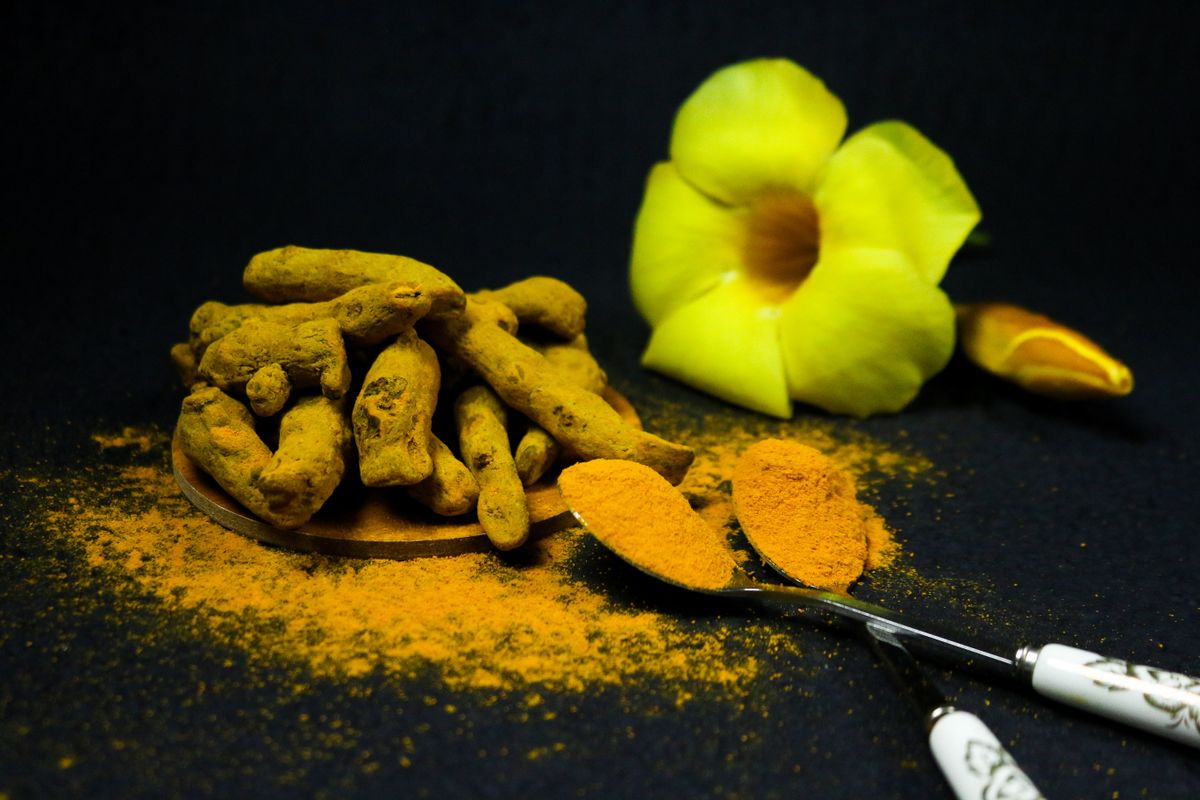
The Vedas, among the oldest scriptures in human history, mention a golden root called Haridra — a substance said to carry the energy of the Divine Mother and the power to purify both body and spirit. That root is turmeric (Curcuma longa), and for over 4,000 years it has occupied a place in Ayurvedic medicine that no other herb quite matches. Today, with more than 200 peer-reviewed studies published on curcumin in 2024 alone, modern science is catching up to what the Charaka Samhita has long declared: turmeric is not merely a spice — it is a sacred medicine.
The Golden Goddess: Turmeric in Classical Texts
In the Atharva Veda (c. 1500 BCE), turmeric is described as the herb that gives "life energy and divine light", capable of purifying both body and spirit. Its Sanskrit names reveal the reverence ancient practitioners held for it: Haridra (the yellow one), Kanchani (golden goddess), Rajani (the queen), and Gauri (the one whose face is radiant). These are not casual descriptors — they reflect a substance considered auspicious enough for temple rituals, wedding ceremonies, and sacred offerings.
The Charaka Samhita and Sushruta Samhita — the two foundational texts of Ayurvedic medicine — classify turmeric as both a Rasayana (rejuvenative tonic) and a powerful Shodhana (purifying agent). The Sushruta Samhita specifically prescribes Haridra for lung disorders, wound healing, and blood purification, while the Charaka Samhita recommends it for digestive complaints, skin conditions, and as a natural immune modulator.
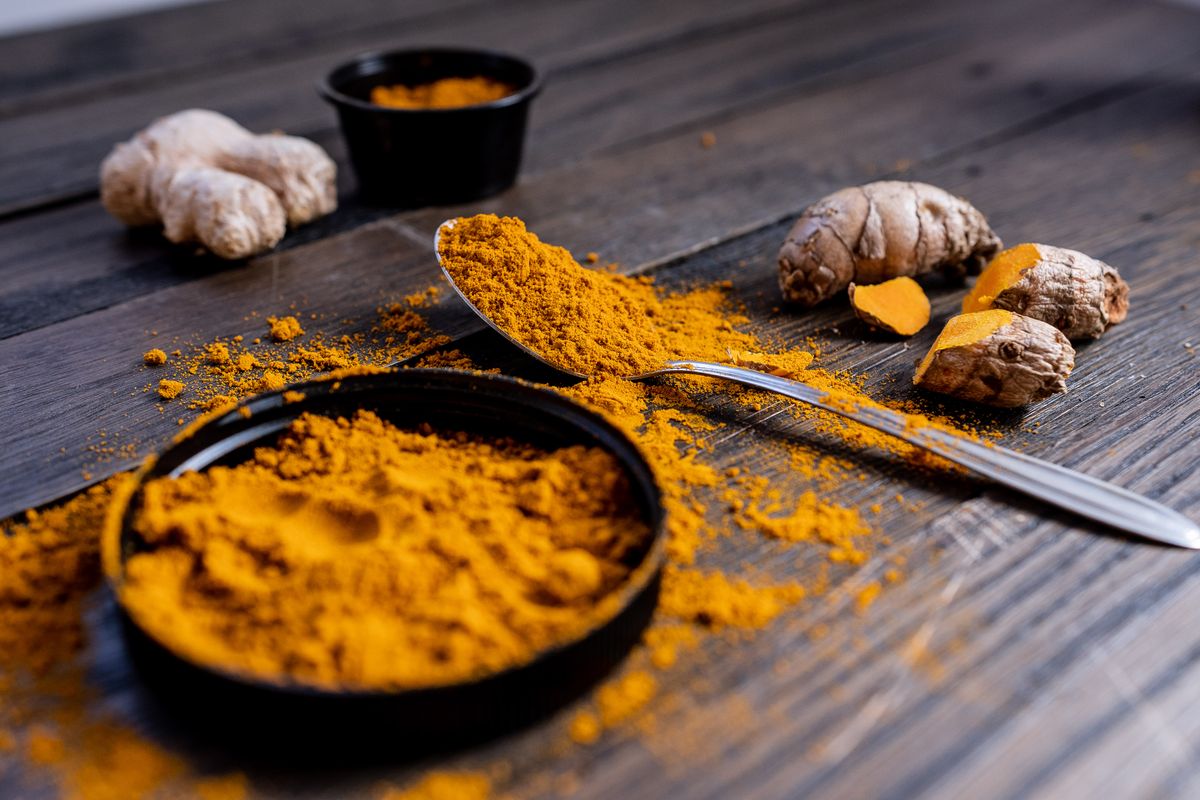 Vibrant turmeric powder and root arranged on a rustic wooden surface
Ayurvedic Pharmacology: Rasa, Virya, and the Doshas
Ayurveda classifies every substance according to its taste (Rasa), energetic effect (Virya), and post-digestive transformation (Vipaka). Turmeric's profile reveals why it is considered tri-doshic — one of the rare herbs that can balance all three doshas when used with awareness.
| Property | Classification | Effect on Doshas |
|---|---|---|
| Rasa (Taste) | Tikta (bitter), Katu (pungent) | Bitter taste pacifies Pitta and Kapha |
| Virya (Energy) | Ushna (heating) | Heating quality pacifies Vata and Kapha |
| Vipaka (Post-digestive) | Katu (pungent) | Pungent vipaka stimulates Agni, reduces Kapha |
| Guna (Quality) | Ruksha (dry), Laghu (light) | Light and dry qualities reduce Kapha |
| Prabhava (Special action) | Blood purifier, anti-inflammatory | Benefits Rakta Dhatu across all constitutions |
Turmeric has a particular affinity for Rasa Dhatu (plasma) and Rakta Dhatu (blood), making it one of Ayurveda's primary herbs for blood purification, liver support, and skin health. Its heating quality ignites Agni (digestive fire) and helps metabolise Ama (toxic residue), while its bitter taste prevents the excess heat that could aggravate Pitta.
Traditional Preparations: Ancient Wisdom Meets Modern Pharmacology
One of the most remarkable aspects of turmeric's Ayurvedic history is how traditional preparations intuitively addressed a problem that modern pharmacology would not identify for centuries: bioavailability.
Curcumin, the primary active compound in turmeric, is notoriously difficult for the body to absorb. It is rapidly metabolised in the liver and intestinal wall, with most oral doses eliminated before reaching the bloodstream. Yet Ayurvedic formulations have always combined turmeric with ingredients that dramatically enhance its absorption:
-
Haldi Doodh (Golden Milk) — Turmeric simmered in warm milk with ghee and black pepper. The fat in milk and ghee increases curcumin solubility, while piperine in black pepper inhibits the enzymes that break curcumin down. A landmark study by Shoba et al. (1998) confirmed that piperine increases curcumin bioavailability by up to 2,000% in humans.
-
Haridra Khand — A classical compound combining turmeric with Pippali (long pepper), Sunthi (dried ginger), sugar, and other spices. Originally prepared as chunky pastilles for travellers, this formulation packages turmeric with the very bioenhancers that modern nutraceutical companies now patent.
-
Medicated Ghees and Oils — Turmeric infused into warm ghee or sesame oil for both internal and external use. The lipid matrix acts as a natural delivery system, protecting curcumin from metabolic degradation.
The Ayurvedic principle of Anupana — the carrier substance used to deliver herbs — was, in effect, an early form of pharmaceutical formulation science.
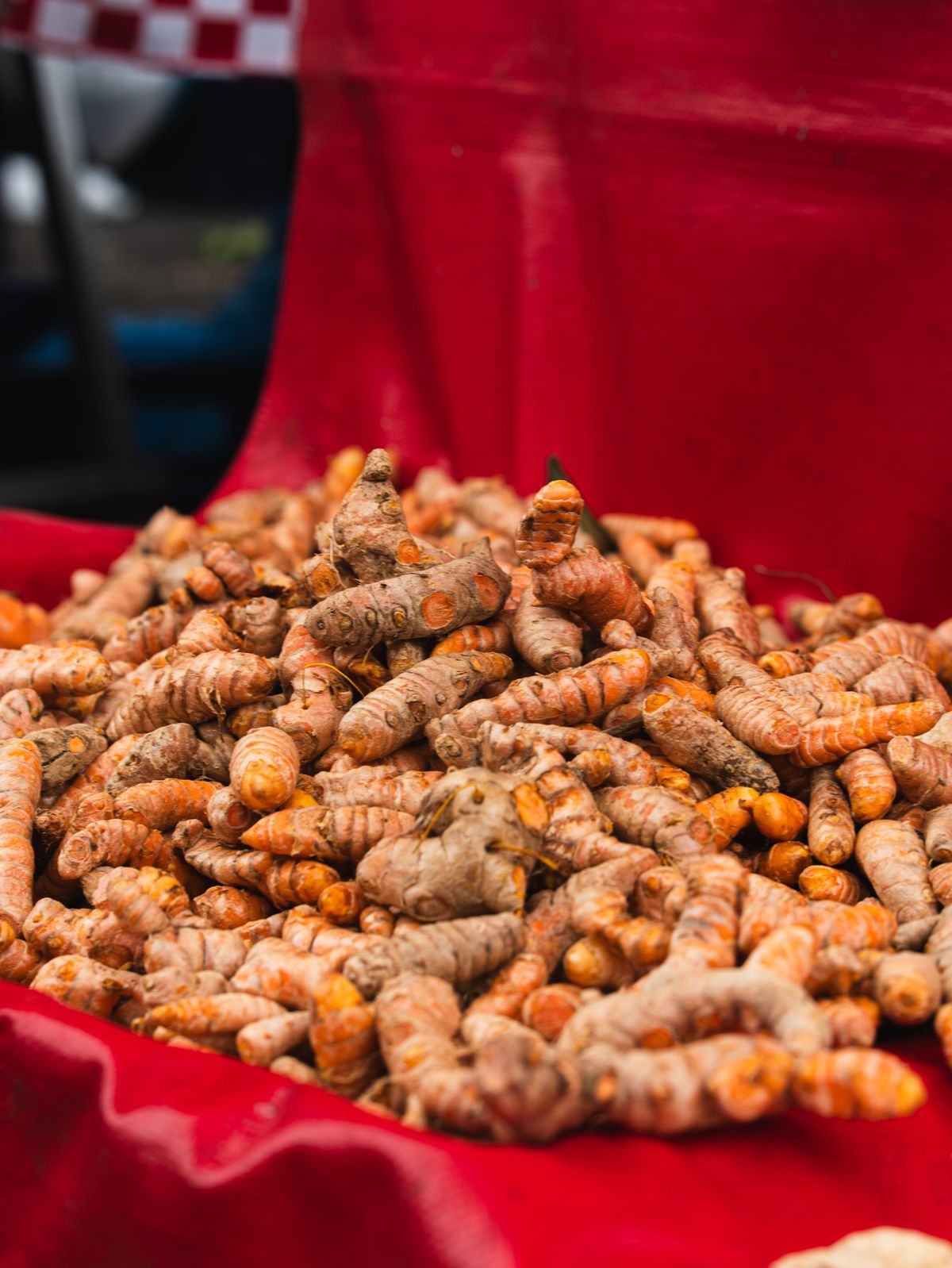 Freshly harvested turmeric roots displayed on red cloth at a local outdoor market
What Modern Science Confirms
The clinical evidence for curcumin has grown substantially in recent years, with systematic reviews and meta-analyses providing the highest level of evidence across several conditions.
Joint Health and Arthritis
A 2023 Bayesian network meta-analysis of 23 studies involving 2,175 patients with knee osteoarthritis found that curcumin significantly reduced pain on the visual analogue scale (VAS) with a mean difference of −1.63 and improved total WOMAC scores by −18.85 points compared with placebo. A 2025 meta-analysis by Zhang and Niu, published in Medicine, examined 7 randomised controlled trials in rheumatoid arthritis and reported significant reductions in CRP (WMD −0.93), ESR (WMD −31.26), and Disease Activity Score (DAS28: WMD −1.47). The authors concluded that curcumin supplementation was associated with "clinically relevant improvements in disease activity and systemic inflammatory markers."
Inflammatory Bowel Disease
A 2025 systematic review and meta-analysis published in PMC evaluated curcumin as an adjunctive therapy in inflammatory bowel disease, finding measurable reductions in inflammatory biomarkers. The results support the traditional Ayurvedic use of turmeric for digestive complaints — a practice recorded in the Charaka Samhita thousands of years before the discovery of TNF-alpha and interleukins.
Neuroprotection
A 2025 narrative review published in Nutrients synthesised evidence showing that curcumin modulates several neuroprotective signalling pathways: NF-κB suppression reduces neuroinflammation, while Nrf2 activation boosts antioxidant response. Critically, research indicates that curcumin can cross the blood-brain barrier, making it a candidate for neurodegenerative conditions — a finding that aligns with turmeric's classical Ayurvedic reputation as a Medhya (brain-supporting) herb.
| Condition | Study Type | Key Finding |
|---|---|---|
| Knee Osteoarthritis | Bayesian meta-analysis (23 studies, n=2,175) | Significant pain reduction (VAS −1.63) and functional improvement |
| Rheumatoid Arthritis | Meta-analysis of 7 RCTs (2025) | CRP −0.93, ESR −31.26, DAS28 −1.47 |
| Neurodegeneration | Narrative review (2025) | Crosses BBB; modulates NF-κB, Nrf2, Aβ pathways |
| Inflammatory Bowel Disease | Systematic review (2025) | Reduced inflammatory biomarkers as adjunctive therapy |
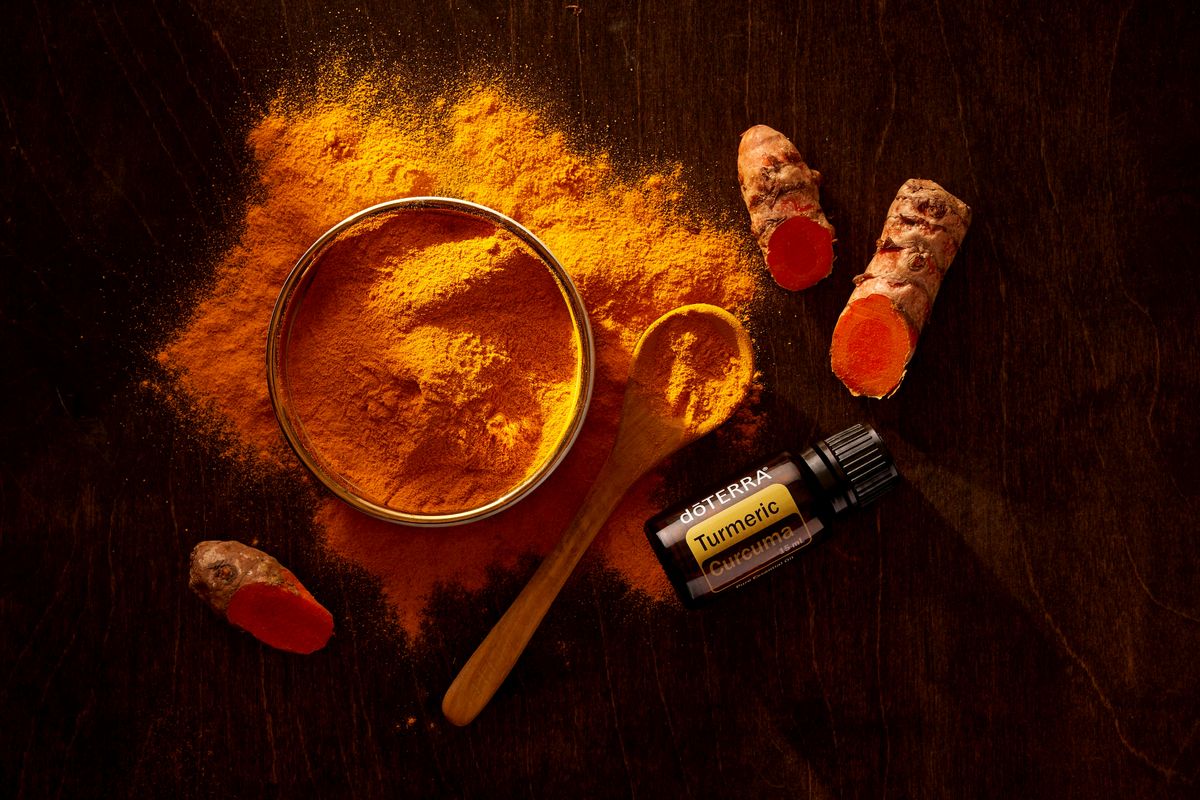 Turmeric powder, curcuma roots, and essential oil on a wooden surface
How to Use Turmeric the Ayurvedic Way
Ayurveda does not prescribe turmeric as an isolated supplement to be swallowed in a capsule. It is integrated into daily life through food, ritual, and therapeutic preparation — always tailored to the individual's constitution and current state of balance.
For Kapha Imbalances (congestion, sluggishness, weight gain)
Combine ½ teaspoon turmeric with warm water, honey, and a pinch of Trikatu (black pepper, long pepper, ginger) each morning. The heating and drying qualities help mobilise stagnant Kapha, clear mucus, and stimulate Agni.
For Pitta Imbalances (inflammation, skin irritation, acidity)
Take turmeric with cooling carriers — aloe vera juice, coconut milk, or room-temperature water with a small amount of ghee. The bitter taste pacifies Pitta while the fat enhances absorption. Avoid excessive doses, as turmeric's heating virya can aggravate a Pitta already in excess.
For Vata Imbalances (joint pain, anxiety, dryness)
Golden Milk is ideal: warm full-fat milk with turmeric, ghee, a pinch of black pepper, and a touch of nutmeg before bed. The fat nourishes Vata's dry quality, the warmth grounds its cold nature, and the nutmeg supports sleep.
General Daily Use
The Ayurvedic recommendation for daily turmeric intake is ¼ to ½ teaspoon of whole turmeric powder incorporated into cooking — added to soups, rice, dals, and sautéed vegetables. This modest, consistent dose, combined with dietary fats and spices, is the traditional approach that modern bioavailability research now validates.
The Whole Root, Not Just the Molecule
Modern research has understandably focused on curcumin as an isolated compound. But Ayurveda has always used the whole turmeric root, which contains not only curcuminoids but also turmerones, polysaccharides, essential oils, and hundreds of other bioactive compounds. Emerging research suggests these components may work synergistically — turmerone, for example, has demonstrated independent anti-inflammatory and neuroprotective activity in preclinical studies.
This is the deeper wisdom of Ayurveda's approach to turmeric: the medicine is not a single molecule extracted in a laboratory, but a living relationship between a whole plant, a traditional preparation method, and an individual constitution. When the Atharva Veda called Haridra a source of "divine light," it was describing something that transcends pharmacology — the integration of body, nature, and awareness that remains at the heart of Ayurvedic healing.
Sources & Further Reading
Research
- Zhang, F. & Niu, B. (2025). Effect of curcumin on inflammatory markers and disease activity in patients with rheumatoid arthritis: A meta-analysis. Medicine, 104(47). View on PMC
- Wang, Z. et al. (2023). Efficacy and safety of curcumin therapy for knee osteoarthritis: A Bayesian network meta-analysis. Journal of Ethnopharmacology. View on ScienceDirect
- Islam, Md. R. et al. (2025). Neuroprotective Potential of Curcumin in Neurodegenerative Diseases: Clinical Insights Into Cellular and Molecular Signaling Pathways. Journal of Biochemical and Molecular Toxicology, Wiley. View on Wiley
- PMC (2025). Curcumin for the clinical treatment of inflammatory bowel diseases: a systematic review and meta-analysis. View on PMC
- Shoba, G. et al. (1998). Influence of piperine on the pharmacokinetics of curcumin in animals and human volunteers. Planta Medica, 64(4), 353–356. View on PubMed
- Karimi, A. et al. (2025). Effects of Curcuminoids Plus Piperine Co-Supplementation on Liver Enzymes and Inflammation in Adults: A GRADE-Assessed Systematic Review and Meta-Analysis. Food Science & Nutrition, Wiley. View on Wiley
Further Reading
- Historical Uses of Turmeric in Ayurvedic Medicine — CreationBiotech
- Turmeric: The Golden Goddess — California College of Ayurveda
- Turmeric Curcumin: Health Benefits & Uses — Banyan Botanicals
- Haridra Khand: Benefits, Uses, Ingredients — Ask Ayurveda
Image Credits
- Cover: Turmeric roots and powder with flower — Pexels
- Turmeric powder and root on rustic surface — Pexels
- Freshly harvested turmeric roots at market — Pexels
- Turmeric powder, roots, and essential oil — Pexels
All images free to use under the Pexels License.